Supporting our Families in Douglas East, and All Around our Island

Like all parents, I am committed to making the lives of my children and grandchildren better. They really are the future of this Island and unfortunately too many are being forced to consider leaving the Island due to housing, employment and economic pressures.
We really need to make this issue a main focus of our next administration and create a raft of policies that help our young families and parents to be able to enjoy, and flourish in, their lives.
I'll be out talking to you all about what your thoughts are, and how we can make positive changes to make families lives better, but for now, here are some of my thoughts.
As always on this site, it's a live document, and will change as I speak to you all, come back and check it regularly.
We have a large number of excellent educators on the Island, and we should be rightly proud of the achievements of all our schools in producing a good education for our generations.
However, we have a burgeoning population in and around Douglas East and our primary schools, School Ny Jubilee and Henry Bloom Noble, are already working at near capacity and above. I recently had the pleasure of a brief tour around the Murray's Road campus of School Ny Jubilee, and was amazed to see that very little had changed since my first visit to it as a child in 1977.
Talking to the staff there, I heard that they were achieving great things but are struggling against tired and damaged infrastructure.
Therefore, I would really like to convey to D.E.S.C. the urgency of progressing the proposals to build a new primary school on the disused Park Road site.

Not only would this create a new modern school for the youngsters of Douglas East and surrounding constituencies, but would allow us to free up two large Brownfield sites for redevelopment, which leads on to the next important area we must address.
Creating Affordable Family Homes
A New School for Douglas East
Our young families need housing urgently; we are losing far too many young families because it is nigh on impossible to get on the housing ladder on the island now. Recent statistics show that the average house price on the Island is approximately 9 times the median salary.
We need a complete suite of policies that directly addresses this problem. We must explore every avenue in which we can create more houses and homes.
How can we do this?
Firstly, we have to look at reducing hurdles in the planning process. We must focus on points like overall societal necessity. We must place the need for immediately available affordable housing, in which our families can live, at the very top of all planning policies. Our current schemes are too constrictive, have too low monetary thresholds, and aren't being utilised well. There are various ways to help people into home ownership.
Government support for shared equity schemes has the potential to help many people into homes, but we must make these schemes workable for all young families as a priority. We should also ensure that these models are used solely to achieve housing for our residents.
We should consider introducing a rent-to-buy scheme with the help of developers.
We must also ensure that all new developments have a large proportion of affordable housing built within them and that this housing is a priority within the developments—not a bolt-on, not the last thing to be completed, and definitely not something that can be bought out of. If we need new legislation to make this happen, then we must do it.
If developers are intent on building luxury-only properties or areas, then they must also build an affordable housing development on an alternative site, and it must be completed before the luxury development can progress.
We must also develop policies that dictate owner occupancy. New builds should have a minimum level of owner-occupied properties. We can create deterrent policies and, if necessary, taxations that de-incentivise the building and purchasing of large numbers of buy-to-let properties. This is not to say we can't have people building properties for rental; we will continue to need to increase the availability of good new rental properties. However, we must ensure that more of the properties on our island are occupied by their owners.
However, we must achieve the support of large developers, whether on or off the island, for these changes in policy, or we will create depression in the construction industry. Therefore, we must allow for a more flexible approach to development in other matters. We cannot be so uptight about the use of zones already around population centres; we must give scope for further growth. We have to accept that these private companies must make money if we are to create more housing, so we must offer support and a structure in which they can help us achieve our goals.
Providing Meaningful Opportunities and Education for our Young People
There is a wholesale change coming within our jobs market; we must prepare for this and ensure our young people are gaining the right skills for the future.
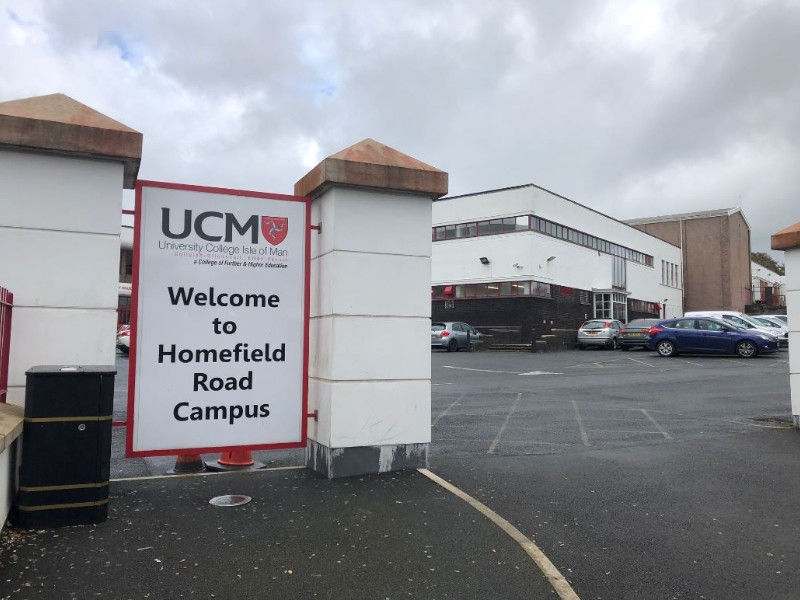
AI will cause a huge shake-up in employment roles, with estimates of 20 to 30% of all administrative and clerical roles being affected. However, it will also provide new and exciting roles for young people and create opportunities. I would work with the management at UCM Isle of Man to ensure we are looking at having as many courses as we can available in the areas we will need to refocus on.
Firstly, we must look to expand the availability of apprenticeship roles and education. Almost everywhere else in Europe, the local tradesman will always have a young trainee in their business, learning the role. We must make it more viable for this to again become the norm for our own local companies.
If we look to Germany and Switzerland, they are tackling their youth employment issues with strong schemes in this area, incentivising young people and employers to take part. The number of people not in education, employment, or training (NEETs) is much less than half the UK and Isle of Man averages in such places.
This will also require investment at UCM to ensure we have the space and facilities to train this much wider range of young people. To fund this, we must look at prioritising such courses as core and changing other courses to a more optional route. Vocational education should become a mainstay of our provision, and more targeted use of funding is essential.
I would also like to suggest a more modular way of experiencing higher education. In many areas, there are skills that can be developed in the shorter term, without the need for a two-, three-, or four-year course. If we could have specialised modules training in specific areas, for example, basic bookkeeping, health and safety, or coding basics, people could build their own skill set more precisely to what they want to achieve and their needs.
This could also help us react quickly to problems caused when we identify a particular area where we need trained people.
We must also plan to encourage the return of our young people after they leave for university and higher education away from the Island. This can be achieved by the innovative use of tax credits and allowances to encourage them to bring their new skills back to the Island to clear debts that have been built up during their studies. Coming home to work should be rewarded!